

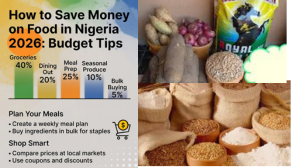
Practical Ways to Save Money on Food in Nigeria 2026 Amid Easing Inflation
In early 2026, Nigeria’s cost-of-living pressures remain real for millions, even as food inflation has dropped significantly to 8.89% in January—the lowest in over 14 years, according to the National Bureau of Statistics (NBS). This welcome moderation follows a sharp decline from 29.63% the previous year, driven by falling prices for staples like maize, beans, cassava, palm oil, eggs, and beef. Headline inflation eased to 15.10%, offering some breathing room for households.
Yet, challenges persist: many Nigerians still feel the pinch from past high prices, currency fluctuations, and uneven regional impacts. Forecasts from the FAO suggest food inflation could rise to around 17.1% in some projections for 2026 due to import reliance and supply issues. This makes smart food budgeting essential.
This guide shares actionable budget tips to save money on food in Nigeria 2026. From meal planning and bulk buying to smart shopping and home cooking, these strategies help stretch your naira further without sacrificing nutrition. Whether you’re a family provider or managing a tight personal budget, implementing these tips can cut monthly food expenses by 20-40%, based on common experiences shared in Nigerian forums and blogs.
Why Food Costs Remain a Challenge in 2026
Despite the NBS-reported drop, food remains the largest household expense. The twelve-month average food inflation stood at 20.29% through January 2026—better than 38.47% the prior year but still high. Staples like rice, yam, and vegetables fluctuate due to seasonal harvests, transport costs, and occasional insecurity in farming areas.
Regional variations exist: states like Kogi and Benue saw higher food inflation, while southern areas benefited more from declines. Urban dwellers in Lagos and Abuja often pay premiums at supermarkets, while rural markets offer fresher, cheaper options.
The good news? Lower inflation creates opportunities for strategic saving. With careful planning, you can maintain balanced meals—rich in carbs, proteins, and veggies—while keeping costs down.
1. Create a Weekly Meal Plan and Shopping List
Meal planning is the foundation of saving money on food in Nigeria 2026. Decide on 7 days of meals in advance to avoid impulse buys and waste.
Steps:
- List affordable staples: rice, beans, garri, yam, plantain, ugwu, ewedu, tomatoes, onions, peppers.
- Plan versatile meals: e.g., beans porridge (adalu) one day, then beans with garri the next.
- Include variety: alternate proteins (eggs, fish, chicken, beef sparingly) and veggies.
- Write a precise shopping list based on the plan—stick to it at the market.
Benefits: Reduces waste (Nigeria loses ~40% of food post-harvest), cuts unplanned spending, and ensures nutrition. A family can save ₦10,000–20,000 monthly by avoiding daily market runs.
Tip: Use free apps or notebooks; review past weeks to refine based on what works.
2. Shop Smart: Markets vs Supermarkets and Timing
Markets offer the biggest savings on food in Nigeria 2026.
- Buy at local open markets (e.g., Mile 12, Oyingbo) for fresh, cheaper produce.
- Avoid supermarkets for basics—they add 30-50% markups.
- Shop late afternoons/evenings: vendors discount perishables to clear stock.
- Bargain politely—common in Nigerian markets.
- Compare prices across stalls.
Bulk buying for non-perishables (rice, beans, oil, garri) saves 20-30%. Group-buy with neighbors or family for even better wholesale rates via apps like PricePally.
Seasonal buying: Purchase abundant items (e.g., tomatoes in dry season) when cheap and preserve.
3. Buy in Bulk and Store Properly
Bulk purchases lower unit costs significantly.
- Staples like 50kg rice or beans last months and cost less per kg.
- Oils and spices in large containers.
- Freeze extras: portion meat/fish, freeze veggies.
Storage tips:
- Use airtight containers for grains to prevent weevils.
- Cool, dry places for yams/onions.
- Freeze cooked stews in batches.
This approach can save 25-40% on staples. Start small—buy 25kg rice instead of 5kg packs.
4. Cook at Home and Batch Cook
Home cooking slashes costs compared to eating out or buying ready meals.
- Prepare large pots: e.g., stew base for multiple dishes.
- Batch cook weekends: rice, beans, soups for the week.
- Use affordable proteins: eggs, beans, mackerel over expensive beef.
- Stretch meals: add veggies to bulk up stews.
Avoid takeaways—jollof rice or snacks cost 3-5x more outside.
5. Embrace Affordable, Nutritious Nigerian Staples
Focus on budget-friendly, healthy foods:
- Beans: protein-rich, versatile (porridge, moi moi, akara).
- Garri/yam/cassava: cheap carbs.
- Leafy greens: ugwu, spinach, waterleaf—grow in pots if possible.
- Eggs: affordable protein.
- Plantain: boil/fry/roast.
- Local fruits: bananas, oranges, pawpaw in season.
Minimize imported/wheat-based items if pricey.
6. Grow Your Own Food (Even Small-Scale)
Backyard or balcony gardening cuts costs.
- Plant ugwu, tomatoes, peppers, onions in pots/sacks.
- Herbs like scent leaf, curry reduce spice buys.
- Start small—seeds are cheap.
Community gardens or cooperatives share resources.
7. Reduce Food Waste and Use Leftovers Creatively
Waste costs money.
- Store properly to extend life.
- Repurpose: yesterday’s stew becomes soup base.
- Use peels/stems in stocks.
Track waste to improve planning.
8. Use Discounts, Apps, and Group Buying
Apps like PricePally offer deals, group buys, and wholesale.
Loyalty programs or market vendor relationships yield discounts.
9. Limit Processed and Convenience Foods
Snacks, sodas, instant noodles add up.
Choose homemade alternatives: akara over buns, fresh juice over bottled.
10. Track Your Food Budget Monthly
Use notebooks or apps (Kuda, PiggyVest trackers) to monitor spending.
Set limits: e.g., ₦50,000 monthly for family of four.
Review and adjust.
Conclusion
Saving money on food in Nigeria 2026 is achievable with planning, smart shopping, and home focus. As inflation eases, these tips maximize relief. Start small—implement one or two—and build habits for long-term savings.
For more articles like this Visit