

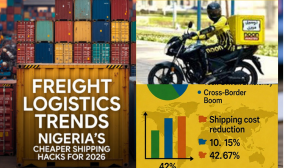
Mastering Nigeria’s Freight Logistics Trends in 2026: Proven Cheaper Shipping Hacks
Nigeria’s freight and logistics sector enters 2026 on a strong growth trajectory, with the market projected to expand from approximately USD 10.95 billion in 2025 to USD 11.66 billion in 2026, according to industry analyses. This upward momentum, driven by infrastructure upgrades, e-commerce surge, and operational efficiencies at key ports, creates both opportunities and persistent cost pressures for businesses and individuals alike.
Despite challenges like poor road networks, insecurity in certain corridors, and diesel costs accounting for over 35% of trucking expenses, positive developments—such as the full operational maturity of Lekki Deep Sea Port, capacity expansions at Onne, and the upcoming National Single Window for customs—are steadily lowering average freight costs. Modal shifts toward rail and inland waterways, alongside digital freight-matching platforms, further help mitigate expenses.
For importers, exporters, e-commerce sellers, and SMEs, these Nigeria freight logistics trends 2026 translate into tangible savings opportunities. This article explores the key trends shaping the sector and shares practical, cheaper shipping hacks for 2026 that can reduce logistics costs by 15-40%, depending on volume and route. Whether you’re shipping containers through Lagos ports or sending parcels nationwide, these strategies help navigate the landscape more affordably.
Key Freight Logistics Trends Shaping Nigeria in 2026
1. Infrastructure Boost and Port Efficiency Gains
The most transformative trend is the continued impact of major port developments. Lekki Deep Sea Port, now handling a significant share of container traffic, has dramatically reduced vessel waiting times and improved turnaround compared to legacy ports like Apapa and Tin Can Island. With natural deep draft allowing larger vessels, transshipment volumes to landlocked neighbors have risen sharply.
Apapa and Tin Can Island continue rehabilitation under the $1 billion Port Rehabilitation Project, gradually easing chronic congestion. The National Single Window initiative, rolling out in phases, simplifies customs procedures and cuts clearance times.
These upgrades directly lower demurrage, detention, and trucking fees inside port premises—key pain points that previously inflated total landed costs.
2. E-Commerce and Last-Mile Delivery Explosion
E-commerce parcel volumes, already dominant in courier, express, and parcel (CEP) activity, continue surging in 2026. Domestic parcels make up the majority, fueled by smartphone penetration, mobile payments, and platforms like Jumia and Konga. This drives demand for micro-fulfillment centers in residential areas and faster last-mile solutions in Lagos, Abuja, Port Harcourt, and Kano.
Tech-enabled startups and aggregators optimize routes and truck utilization, reducing empty backhauls and passing savings to shippers. Last-mile costs, often the highest segment, are being compressed through AI route planning and electric/CNG two-wheelers in urban zones.
3. Modal Diversification: Less Road, More Rail and Waterways
Persistent road insecurity and high diesel costs (still a major trucking expense) push shippers toward rail and inland waterways where feasible. The Lagos-Kano rail line and planned expansions offer cheaper, safer alternatives for bulk commodities. Inland waterways, especially along the Niger and Benue, gain traction for agricultural and dry bulk cargo.
This shift lowers overall freight costs for eligible routes and reduces pressure on road infrastructure.
4. Digitalization and Freight Matching Platforms
Widespread adoption of digital freight-matching platforms connects shippers directly with carriers, eliminating middlemen and reducing empty runs. Real-time tracking, electronic documentation, and AI-driven load optimization further cut costs.
CNG trucking fleets, supported by government incentives, lower fuel expenses compared to diesel in suitable operations.
5. Cost Pressures That Remain
Despite improvements, diesel volatility, port handling charges, and last-mile inefficiencies in congested cities keep Nigeria’s logistics costs among the highest globally as a percentage of product value. Security risks on highways and occasional border frictions add premiums.
Understanding these trends is crucial before applying cheaper shipping hacks.
Top Cheaper Shipping Hacks for Nigeria in 2026
Hack 1: Leverage Lekki Deep Sea Port for Container Imports
Why it saves money: Lekki’s efficiency reduces vessel waiting times (often days at Apapa/Tin Can), cuts demurrage, and lowers terminal handling charges for many cargo types.
How to apply:
- Route eligible imports (containers, bulk) through Lekki instead of Apapa/Tin Can.
- Use freight forwarders with strong Lekki partnerships.
- Combine with bonded warehousing near the port to defer duty payments.
Potential savings: 20-35% on total port-related fees and delays for mid-to-large shipments.
Hack 2: Consolidate Shipments (Groupage/LCL)
Why it works: Full container load (FCL) is expensive for small volumes. Less-than-container-load (LCL) or groupage consolidates multiple shippers’ cargo.
Practical steps:
- Partner with reliable consolidators or forwarders offering weekly LCL services from China/Europe.
- Join SME shipping groups on platforms or WhatsApp communities to share containers.
- Use digital platforms to find matching cargo.
Savings: Up to 40-60% versus shipping solo small volumes.
Hack 3: Switch to Rail for Eligible Inland Routes
Why it’s cheaper: Rail freight costs significantly less per ton-km than trucking, especially for bulk and non-time-sensitive cargo.
How to implement:
- Use Lagos-Kano rail for northern-bound cargo.
- Explore barge options on inland waterways for agricultural produce or construction materials.
- Combine rail with last-mile trucking only for final delivery.
Potential savings: 30-50% on long-haul inland transport compared to road-only.
Hack 4: Optimize Last-Mile with Aggregators and Tech Platforms
Why it reduces costs: Last-mile often accounts for 40-50% of total delivery expense in urban Nigeria.
Effective hacks:
- Use aggregators like Gokada, Max.ng, or Kobo360 for motorcycle/bicycle delivery in congested areas.
- Partner with platforms offering route optimization and consolidated drops.
- Offer pickup points or locker solutions to avoid failed deliveries.
- Negotiate volume-based rates with reliable last-mile providers.
Savings: 20-40% on urban deliveries, plus reduced returns.
Hack 5: Adopt CNG Trucks and Fuel-Efficient Practices
Why it’s gaining traction: CNG is cheaper and cleaner than diesel, with government incentives expanding refueling infrastructure.
Implementation tips:
- Switch to CNG trucks for own fleet or choose carriers with CNG fleets.
- Implement driver training for fuel-efficient driving.
- Use route-planning apps to minimize idling and detours.
Savings: 20-35% on fuel costs, a major trucking expense.
Hack 6: Utilize Digital Freight Matching and Load Boards
Why it saves: Platforms eliminate broker margins and reduce empty backhauls.
Best practices:
- Register on Nigerian platforms connecting shippers and carriers.
- Post loads in advance for competitive bidding.
- Use real-time tracking to avoid demurrage.
Savings: 15-30% through direct carrier deals and better load utilization.
Hack 7: Time Shipments Strategically and Negotiate Rates
Why timing matters: Avoid peak seasons (festive periods) and negotiate off-peak.
Tips:
- Ship during low-demand windows for better rates.
- Lock in annual contracts with forwarders/carriers for volume discounts.
- Compare multiple quotes—use apps or agents.
Savings: 10-25% through timing and negotiation.
Hack 8: Improve Packaging and Documentation
Why it helps: Proper packaging reduces damage claims and insurance costs; accurate docs speed clearance.
Quick wins:
- Use standardized, lightweight packaging.
- Digitize documents for faster customs.
- Ensure HS codes and valuations are correct to avoid delays/penalties.
Savings: Avoid extra fees from damage, detention, or customs holds.
Hack 9: Explore Air Freight for High-Value, Time-Sensitive Items
Why consider air: Despite higher base rates, air avoids road risks and long delays for urgent cargo.
When to use:
- For high-value/low-volume items (electronics, perishables).
- Compare total landed cost (time value + risk) versus sea.
Savings: Potentially lower total cost for time-critical shipments.
Hack 10: Join SME Shipping Cooperatives or Networks
Why it works: Collective bargaining power secures better rates. Eg ACE logistics, Jumia Logistics, FedEx.
How to join:
- Participate in trade associations or online communities.
- Pool volumes with peers for groupage or negotiated contracts.
Savings: 15-30% through shared leverage.
Conclusion
Nigeria’s freight logistics trends in 2026 present a landscape of improvement and opportunity. With ports becoming more efficient, digital tools spreading, and modal options expanding, businesses can achieve meaningful reductions in shipping costs.
By combining infrastructure advantages with practical hacks—routing through Lekki, consolidating loads, optimizing last-mile, negotiating smartly, and embracing digital platforms—shippers can navigate the year more affordably. Start by auditing current logistics spend, then implement 2-3 hacks that fit your volume and routes. Consistent application can yield substantial savings, enhancing competitiveness in a recovering economy.
For more articles like this Visit