

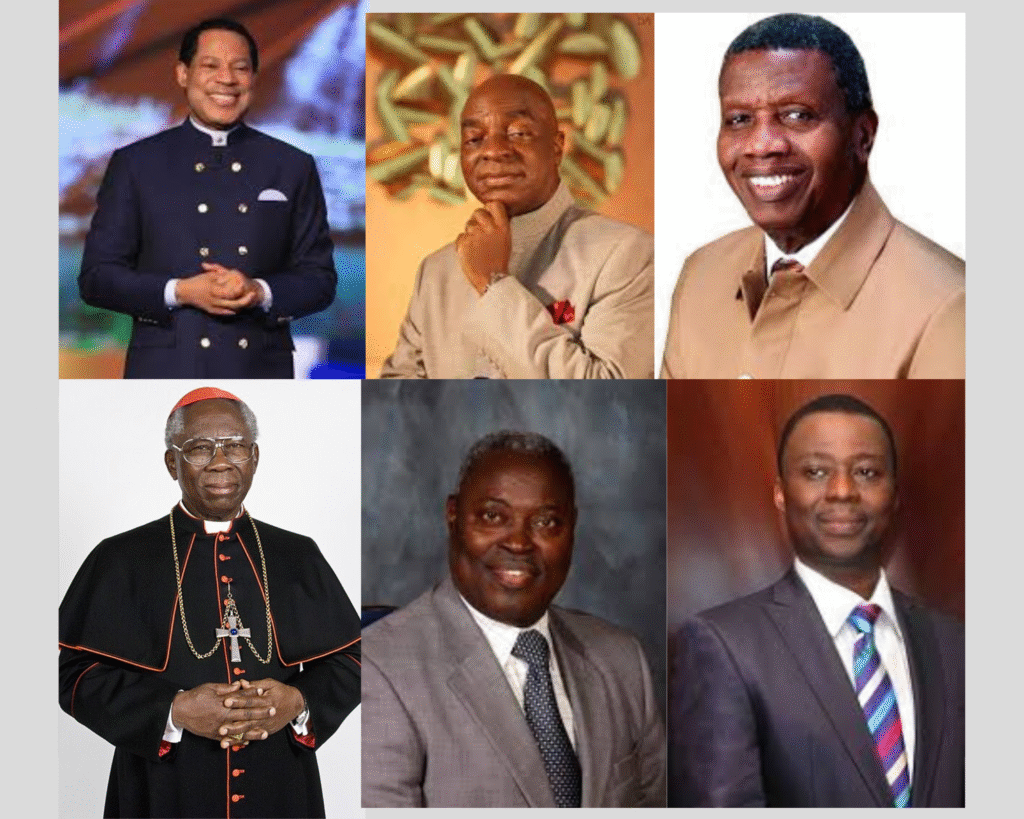
Nigerian Churches Impact on the Nigeria Populace, Economy and Nation Building
In a nation where public infrastructure often struggles to meet the demands of over 200 million citizens, faith-based organisations have quietly become pillars of development. Nigeria’s churches are not just spiritual homes; they are economic engines, educational powerhouses, healthcare providers, and catalysts for nation building. From producing globally competitive graduates to constructing self-sustaining cities and running free hospitals that serve millions, these institutions fill critical gaps left by government systems.
This detailed analysis ranks the Nigerian churches with the verifiable impact on the Nigeria populace, economy and nation building. The ranking is based on current, independently verifiable evidence (2023–2026 data) such as Times Higher Education (THE) rankings, National Universities Commission reports, Christian Health Association of Nigeria (CHAN) statistics, peer-reviewed academic papers, official university sustainability reports, and mainstream media documentation of jobs created, infrastructure built, and lives transformed.
Key metrics include:
- Human capital development (university rankings, graduate employability rates)
- Healthcare access (number of facilities and beneficiaries)
- Direct employment and infrastructure investment
- Corporate Social Responsibility (CSR) programmes with documented locations, timelines, and outcomes
- Contribution to moral leadership and social cohesion
These churches collectively employ tens of thousands, operate dozens of universities and hundreds of health facilities, and inject billions into local economies through construction, agriculture, media, and entrepreneurship. Their impact spans education (producing skilled workforce for GDP growth), health (reducing mortality in underserved areas), poverty alleviation, and values-based leadership that underpins national stability.
1. Living Faith Church Worldwide (Winners’ Chapel) – Bishop David Oyedepo
Top-ranked for quantifiable metrics: Covenant University is Nigeria’s consistently highest-ranked private university in THE World University Rankings and SDG Impact Rankings.
Education Initiatives
Covenant University was established in 2002 at Canaanland, Ota, Ogun State. It pioneered world-class education with a focus on entrepreneurship and innovation. Landmark University followed in 2011 at Omu-Aran, Kwara State, specialising in agriculture to drive food security. Both universities boast over 90% graduate employability (Stutern/Jobberman surveys). The Covenant University Centre for Development and Innovation in Community Impact (CU-CDIIC) runs skills programmes that have trained thousands in Ota and surrounding communities since 2014.
Healthcare and CSR Programmes
- Free medical outreaches and boreholes in Ado-Odo/Ota LGA (ongoing since 2015).
- Waste-to-Wealth and Cisco Youth Empowerment programmes (launched 2014).
- Scholarships and feeding schemes for indigent students.
Economic and Infrastructure Impact
Canaanland mega-campus (Ota, Ogun State, developed since 1999) directly employs 18,000–23,000 people and stimulates local SMEs through shops and services. The Ark Project (109,000-seat auditorium, construction began 2021, expected completion 2026) is creating thousands of construction jobs. Evidence: Covenant University Sustainability Report 2023/2024 and THE rankings. Links: https://covenantuniversity.edu.ng and https://sdg.covenantuniversity.edu.ng.
Nation Building Role
By producing ethical leaders and agricultural innovators, Winners’ Chapel strengthens Nigeria’s human capital and food security.
2. Redeemed Christian Church of God (RCCG) – Pastor E.A. Adeboye
Redemption City on the Lagos-Ibadan Expressway (Mowe/Ogun State) is a self-sustaining township developed since the early 1980s, complete with roads, power plants, water systems, and a medical centre.
Education
Redeemer’s University (RUN) was founded in 2005 at Ede, Osun State. It ranks among Africa’s top for SDG 6 (clean water) in 2025 THE Impact Rankings. The Redeemers College of Technology and Management opened at Redemption Camp in 2018.
Healthcare CSR
- “His Love in Action” and SHEMBAGS programmes (formalised 2017) include free clinics, HIV/AIDS testing, and maternal care.
- Over 9 million beneficiaries documented by 2025.
- ICU donations to LUTH (Ikeja, 2017) and Jos University Teaching Hospital (2019).
Infrastructure and Economic Impact
Redemption City expansions (₦30 billion+ in recent years) create direct and indirect jobs for over 200,000. Vocational training and micro-enterprise schemes operate nationwide. Evidence: RUN Sustainability Report 2025 and CSR Reporters 2024. Links: https://run.edu.ng and https://www.rccg.org.
Nation Building
RCCG’s model of community self-reliance has influenced national policy on private-sector infrastructure.
3. Roman Catholic Church in Nigeria
Pioneers of modern education and healthcare since the 19th century (Sacred Heart Hospital, Abeokuta, 1895).
Healthcare
Operates approximately 425 hospitals and clinics through the Christian Health Association of Nigeria (CHAN). These facilities serve rural and urban poor across 30+ states. During COVID-19 (2020), Catholic hospitals offered beds and equipment to government. Caritas Nigeria (established 2010) runs HIV/TB, nutrition, and emergency response programmes.
Education
Universities include Madonna University (Elele, Rivers State, 1999), Veritas University (Abuja, 2007), and Caritas University (Enugu). Hundreds of primary/secondary schools and scholarship schemes (e.g., Nsukka diocese rural education). Justice, Development and Peace Commission (JDPC) provides skills training and microfinance in multiple dioceses.
CSR and Special Programmes
- Water and sanitation projects in Abuja Archdiocese (ongoing since 2010s).
- Youth empowerment and women’s economic programmes.
- Rural agricultural schemes.
Locations and Timelines
Projects span Lagos (1895 hospital), Enugu, Abuja, and northern states. Evidence: CHAN reports, Caritas Nigeria website (caritasnigeria.org), and FMOH data.
Impact
Catholic institutions produce a large share of Nigeria’s medical and teaching professionals, directly supporting public health and literacy.
4. Christ Embassy (Believers’ LoveWorld Inc.) – Pastor Chris Oyakhilome
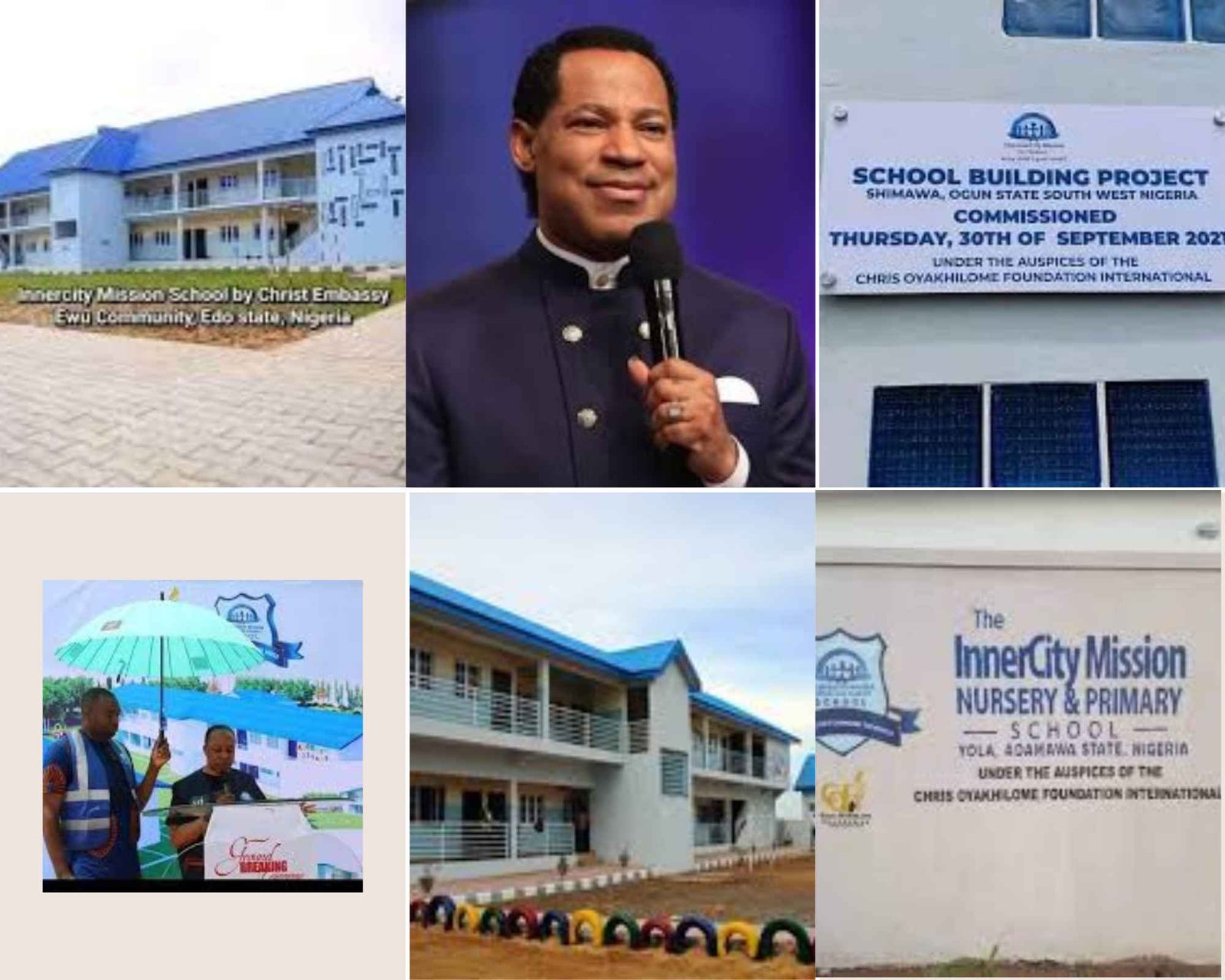
Education and Child Development
Inner City Mission for Children (launched December 2005) runs 16+ tuition-free primary schools with feeding, uniforms, and books. Examples: Demsa/Yola (Adamawa State, commissioned ~2021), Ibejulekki (Lagos, 2023), Murbai (Taraba), and Ewu communities. Over 3,000 children have completed primary education; total global impact exceeds 1.1 billion beneficiaries by 2025.
Healthcare
Loveworld Medical Centre and Community Clinics (Ikeja, Yola, Jos, Eket, Maiduguri; groundbreaking for flagship Aseese facility on Lagos-Ibadan Expressway in 2020, commissioned ~2023). Volunteer Medical Corps and Trauma Care International Foundation provide free surgeries and outreach.
Economic Initiatives
Parallex Bank, KingsChat app, media empire, and youth leadership programmes (FALA scholarships).
Evidence
Official sites: https://theinnercitymission.ngo and https://loveworldmedicalmissions.org. News reports confirm free schools and medical impact.
5. Deeper Life Bible Church – Pastor W.F. Kumuyi
Education
Anchor University (founded 2016, Ayobo-Ipaja, Lagos; permanent campus under construction at Maba/Obafemi-Owode, Ogun State since 2023). Secondary schools in nearly every state capital (e.g., Eyenkorin, Ilorin; Osiele, Ogun). Focus on moral discipline produces a reliable workforce.
CSR
Rural health centres and character-building programmes reduce social vices. Evidence: University website (aul.edu.ng) and academic papers on Pentecostal education.
6. Evangelical Church Winning All (ECWA)
Education and Healthcare
Bingham University (Karu, Nasarawa State, 2005) with teaching hospital. Over 110 clinics/hospitals via CHAN, with roots in 1893 SIM missions (Badagry, Egbe, Jos). Free medical outreaches in northern communities (e.g., Sayidna Village, 2025). Evidence: https://ecwaglobal.org and Bingham University site.
Nation Building
Strong presence in underserved northern Nigeria promotes stability and professional training.
7. Mountain of Fire and Miracles Ministries (MFM) – Dr. Daniel Olukoya
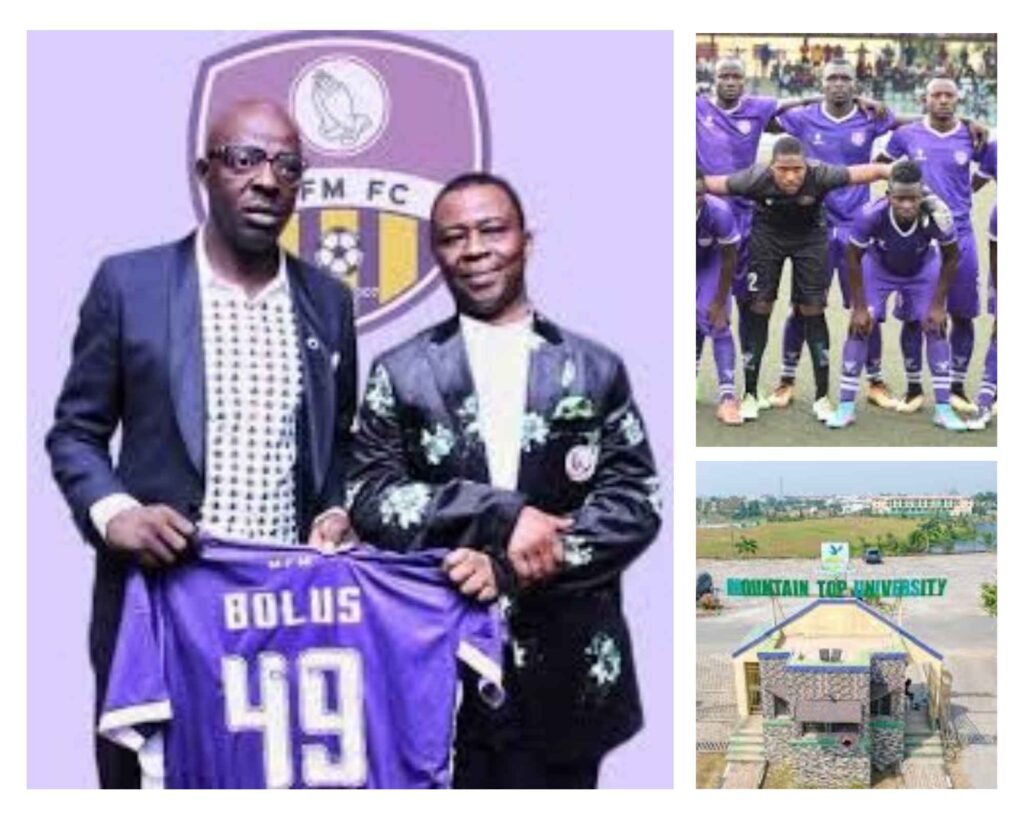
Mountain Top University (Ibafo/Makogi Oba, Ogun State, established 2015). DK Olukoya Foundation scholarships for indigent students (since inception). Skill acquisition, MFM football club and the football club academy, school renovations, and free medical outreaches in Lagos and Ogun communities. Evidence: https://mtudkof.org.ng and convocation reports.
8. Christ Apostolic Church (CAC)
Joseph Ayo Babalola University (JABU, Ikeji-Arakeji, Osun State, established 2006 – first entrepreneurial university in Nigeria). New Senate Building and innovation programmes (2023). Community service and scholarships. Evidence: https://jabu.edu.ng.
9. Church of Nigeria (Anglican Communion)
Ajayi Crowther University (Oyo Town, Oyo State, licensed 2005; roots in CMS Training Institution Abeokuta 1853, St. Andrews College Oyo 1920). Historical network of schools and hospitals that produced independence leaders. Evidence: https://acu.edu.ng/historical-background.
10. Church of God Mission International (Benson Idahosa Legacy)
Benson Idahosa University (BIU, Benin City, Edo State). Soul-Food Outreach for IDP camps in northern Nigeria (ongoing partnership with 1,900 orphaned children; medical, academic, and spiritual support). Faith Mediplex hospitals. Evidence: https://biu.edu.ng/social-responsibilities.
Conclusion
Collective Power for a Greater Nigeria. These Nigerian churches with the highest verifiable impact on Nigeria economy and nation building have transformed lives through education, healthcare, jobs, and values. Their verifiable contributions — documented in university rankings, CHAN reports, sustainability documents, and independent news — prove faith institutions are indispensable to Nigeria’s progress.
For more articles like this Visit